Precision Agriculture: IoT Sensors Revolutionizing Greenhouse Yields
Controlled environment agriculture (CEA) represents the future of food production. By combining IoT sensors, AI analytics, and automated controls, modern greenhouses are achieving yields that were unimaginable just a decade ago—while using fewer resources than ever.
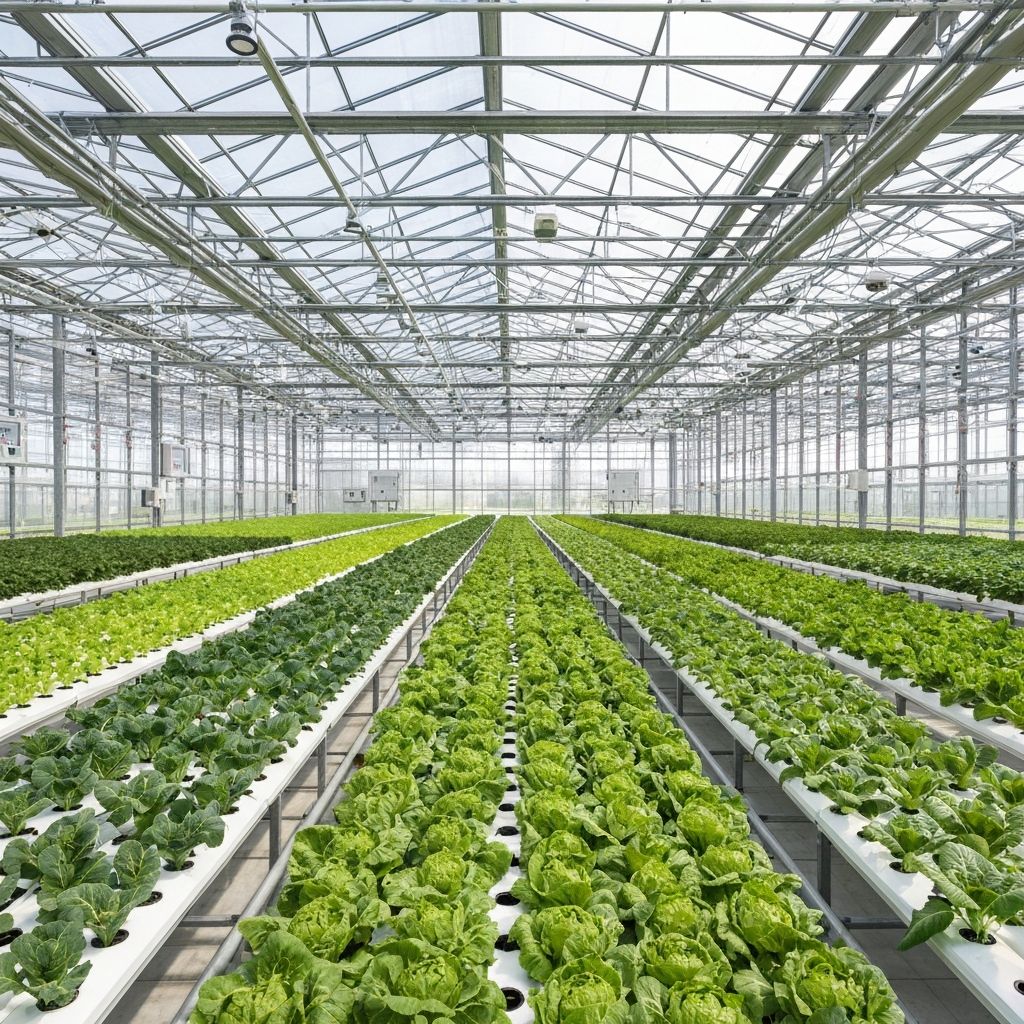
The Science of Controlled Environments
Plants are remarkably sensitive to their environment. A 2°C temperature swing, a 10% change in humidity, or a few hours of suboptimal lighting can significantly impact growth, yield, and quality. Traditional greenhouse management relied on periodic manual measurements and the intuition of experienced growers.
IoT-enabled precision agriculture changes this equation entirely. With sensors measuring dozens of environmental parameters continuously, growers can maintain optimal conditions 24/7—and the AI learns exactly what "optimal" means for each crop variety.
The Sensor Network
A modern precision greenhouse deploys a comprehensive sensor network that monitors every aspect of the growing environment:
Climate Sensors
Temperature, humidity, CO2, light intensity
Sampling: Every 30 seconds
Irrigation Sensors
Soil moisture, EC, pH, water flow
Sampling: Every 60 seconds
Plant Health Monitors
Leaf temperature, chlorophyll fluorescence, growth rate
Sampling: Every 5 minutes
Ventilation Sensors
Airflow, vent position, fan status
Sampling: Every 30 seconds
From Data to Decisions
Raw sensor data is just the beginning. The true value emerges when AI processes this data to drive automated decisions:
Climate Control
The system continuously optimizes temperature, humidity, and CO2 levels based on plant growth stage, time of day, and external weather conditions. For example, it might:
- Lower nighttime temperatures slightly to encourage fruiting in tomatoes
- Increase CO2 concentration during peak photosynthesis hours
- Manage humidity to prevent disease while maintaining transpiration
Precision Irrigation
Water delivery is calculated individually for each growing zone based on:
- Current soil moisture levels
- Plant evapotranspiration rates (calculated from climate data)
- Nutrient requirements based on growth stage
- Water quality parameters (EC, pH)
This precision approach typically reduces water consumption by 40-50% compared to traditional timer-based irrigation while improving plant health.
Lighting Optimization
Supplemental lighting is one of the largest energy costs in controlled environment agriculture. The AI optimizes light delivery by:
- Tracking daily light integral (DLI) and supplementing only as needed
- Adjusting spectrum based on plant growth stage
- Coordinating with electricity pricing to minimize costs
- Accounting for natural light from weather forecasts
Early Warning Systems
Perhaps the most valuable capability is early detection of problems before they become visible:
Real-World Example: Disease Prevention
A tomato greenhouse detected subtle changes in leaf temperature distribution—a 0.3°C variance that indicated early-stage Botrytis infection. The AI immediately adjusted ventilation to reduce humidity and alerted the grower. What could have been a 30% crop loss was limited to a single row of plants.
The ROI of Precision
For commercial greenhouse operations, the financial impact is substantial:
| Factor | Impact |
|---|---|
| Yield increase | +25-35% |
| Water cost reduction | -40-50% |
| Energy cost reduction | -25-35% |
| Crop loss prevention | -50-70% |
| Labor optimization | -20-30% |
| Typical ROI payback | 12-18 months |
Getting Started
Implementing precision agriculture doesn't require starting from scratch. Modern IoT platforms like Cereb can integrate with existing greenhouse infrastructure:
- Assessment: Map existing sensors and control systems
- Gap analysis: Identify additional sensing needed for comprehensive coverage
- Phased deployment: Start with climate monitoring, expand to irrigation and lighting
- AI training: System learns your specific crops and conditions
- Optimization: Continuous improvement based on outcomes
Grow Smarter with OneFarm
Cereb's OneFarm solution is purpose-built for controlled environment agriculture. See how AI-powered monitoring can transform your greenhouse operations.